Product line
Paperboard MAP packaging that extends shelf life — and recycles
MAP and VSP trays in high-barrier paperboard: the atmosphere stays controlled, the print stays premium, and the package separates into paper and plastic streams after use.
Food scenarios
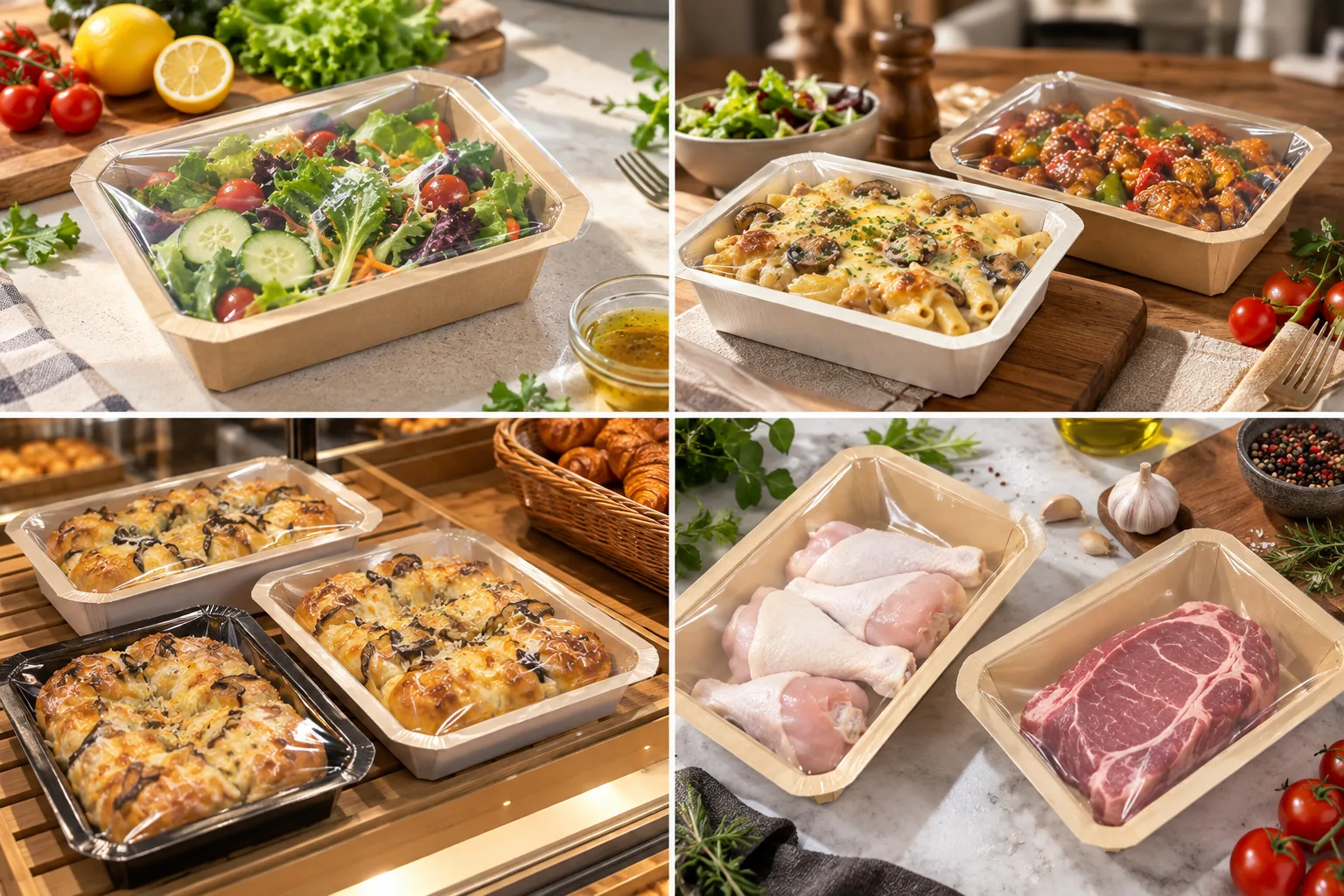
One tray platform, four food scenarios
Structure, barrier layer and lidding film are validated as one system for each food type — customised to your SKU, capacity and end-use.
Fresh salads
Breathing balance
Anti-fog lidding keeps the view clear; controlled gas mix matches produce respiration; easy-peel opening for grab-and-go.
Ready meals
Chill, seal, reheat
Oil-resistant, leak-controlled structures rated for chilled distribution and reheating — ovenable options available.
Bakery
Heat, shape, release
Heat-resistant structures that hold their shape and release baked goods cleanly, from proofing to display.
Fresh meat & seafood
High barrier, sealed
High-barrier liners control liquid and hold the MAP gas mix for the full shelf life; VSP option for premium cuts.
MAP
Gas-mix packaging
Adjusts the in-pack O₂/CO₂/N₂ balance with barrier tray and lidding film to manage quality and shelf life.
VSP
Vacuum skin packaging
Air is removed so the skin film hugs the food and tray — stronger presentation and less free space in the pack.
Structure routes
Three routes, selected per application
Tray structure, lidding film and food process must be validated together — we help you pick and prove the right route.
| Dimension | Paper-based high-barrier MAP | CPET heat-resistant | Renewable barrier paper |
|---|---|---|---|
| Typical structure | Paperboard + PE/EVOH/PE liner | CPET tray + PET lidding film | Paperboard + water-based / renewable barrier layer |
| Best for | Salads, chilled ready meals, fresh meat | Microwave / oven-ready meals | Dry or low-fat foods (after validation) |
End of life
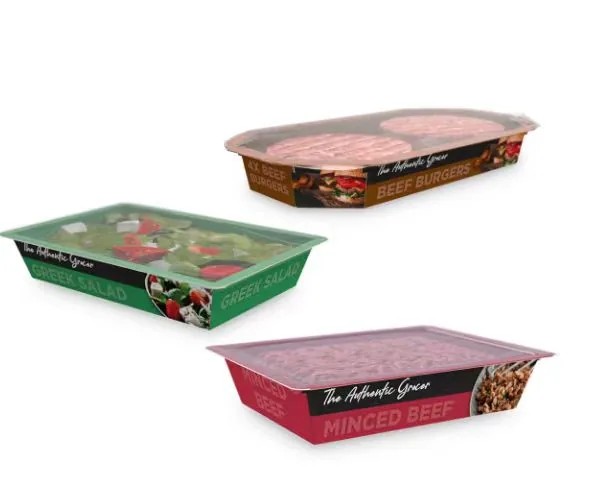
Designed for separation, not landfill
Compared with a conventional plastic MAP tray, the paperboard structure cuts plastic use by 85% or more. After use, the package splits into clean material flows:
Peel off the lidding film
Open from the easy-peel corner and remove the film completely.
Separate the barrier liner
Pull the preset liner structure away from the paperboard tray.
Sort both streams
Paperboard and plastic follow local recycling guidance.
FAQ
Common questions about paperboard MAP
Straight answers — the same ones our sales engineers give on first calls.
What is modified atmosphere packaging (MAP)?
MAP replaces the air inside a sealed package with a controlled gas mix — typically balancing O₂, CO₂ and N₂ — to slow oxidation and microbial growth. Combined with a high-barrier tray and lidding film, it keeps fresh food saleable for longer than standard sealed packaging.
What is the difference between MAP and VSP trays?
MAP holds a protective gas mix in the headspace above the food. Vacuum skin packaging (VSP) removes the air and draws a transparent film tightly over the food and tray, which suits high-value products like fresh meat, seafood and cheese where presentation matters.
Which foods is paperboard MAP suitable for?
Fresh salads, chilled ready meals, fresh meat and poultry, seafood and bakery lines. The tray structure, barrier system and lidding film are selected and validated together for each food type and temperature range.
Can paperboard MAP trays run on our existing sealing line?
Yes — the tray platform is designed to be compatible with automatic denesters and standard tray-sealing equipment used for plastic MAP trays, without custom sealing machines or mould changes.
How is the package recycled after use?
The easy-peel lidding is removed first, the separable barrier liner is pulled from the paperboard tray, and the two materials go into their local recycling streams. Actual disposal follows the local recycling system.
Want samples on your sealing line?
Tell us the food category, tray size and shelf-life target — we will propose a structure and run sealing trials with you.